Sports guide
Explaining Off-ball movement in Basketball Coverage
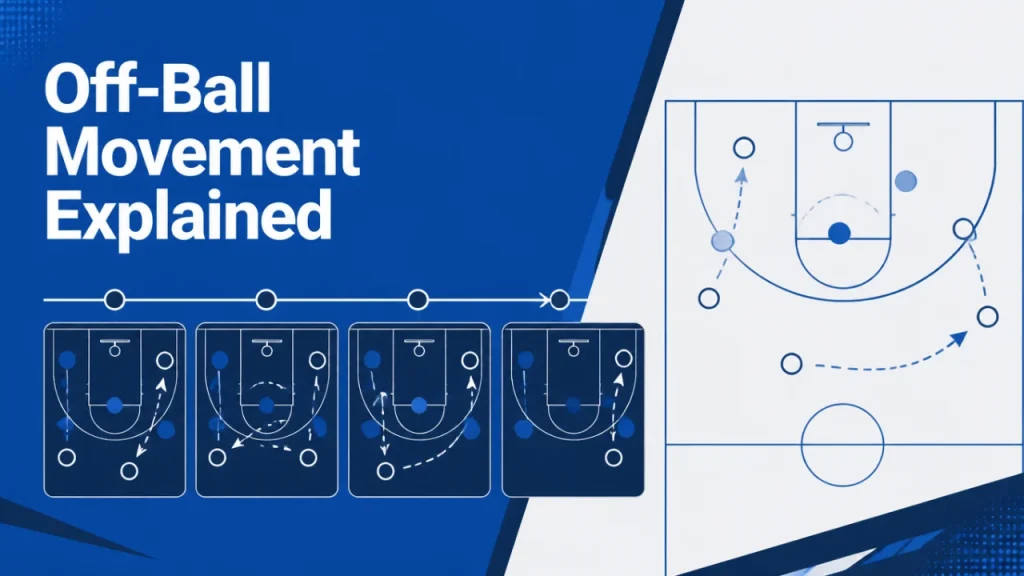
Off-ball movement refers to the actions players take when they do not possess the basketball. It is a fundamental element of both offensive and defensive strategies, essential for creating scoring opportunities, maintaining proper spacing, and disrupting an opponent’s game plan. Understanding how players move without the ball is key to appreciating the tactical depth of basketball, as it directly influences shot selection, defensive assignments, and overall team cohesion.
The Importance of Off-Ball Movement
While the player with the ball often draws the most attention, the actions of teammates without the ball are equally vital. Effective off-ball movement can:
- Create space: By moving to open areas, players can stretch the defense, making it harder for opponents to guard multiple offensive threats simultaneously.
- Generate scoring opportunities: Well-timed cuts and screens can lead to easy layups, open jump shots, or advantageous matchups.
- Improve ball circulation: Constant movement helps the ball handler find passing lanes and keeps the offense dynamic, preventing predictable play.
- Fatigue defenders: Forcing defenders to constantly chase and react can wear them down over the course of a game, leading to defensive breakdowns.
Key Types of Off-Ball Movement
Several distinct actions comprise effective off-ball movement, each serving a specific purpose within an offensive scheme.
Cuts
A cut is a quick, sharp movement by an offensive player without the ball, designed to get open for a pass or to draw a defender away from another area. There are various types of cuts:
- Backdoor Cut: When a defender overplays the passing lane, an offensive player can quickly cut behind them towards the basket. This is particularly effective against aggressive perimeter defense. For instance, if a defender is pressing high on the wing, an offensive player might suddenly dart to the hoop, leaving the defender stranded.
- V-Cut / L-Cut: These cuts are used to create separation from a defender and receive a pass. A V-cut involves moving towards the defender, then sharply changing direction away to create space. An L-cut is similar but involves moving along the baseline or sideline before making a sharp turn towards the ball. These are often used when a player wants to receive the ball on the wing or in the post.
- Flash Cut: A quick movement from the baseline or low post to the high post or free-throw line extended, often used to receive a pass in the middle of the floor or to draw a defender.
Screens
A screen is when an offensive player positions their body to impede a defender’s movement, allowing a teammate to get open. Proper screening requires good timing and solid positioning.
- Off-Ball Screen: Unlike a pick-and-roll where the screen involves the ball handler, an off-ball screen is set for a teammate without the ball. For example, a big man might set a screen near the free-throw line for a guard to run off of, creating an open jump shot or a driving lane. This forces the defender to navigate around the screen, giving the offensive player a momentary advantage.
- Flare Screen: A screen set on a defender from the side, forcing them to run around it and allowing the offensive player to move towards the perimeter for an open shot.
- Back Screen: A screen set on a defender from behind, typically near the basket, to free up a teammate for a cut to the hoop.
Spacing
Spacing refers to how players position themselves on the court relative to each other and the ball. Good spacing is crucial for effective off-ball movement.
- Court Balance: Ensuring players are spread out across the court, not bunched together, prevents defenders from guarding multiple players easily. If too many players are on one side of the court, the defense can collapse and clog passing lanes.
- Threatening Positions: Players position themselves in areas where they are a scoring threat, even without the ball. This keeps defenders honest and prevents them from solely focusing on the ball handler. For example, a sharpshooter positioned in the corner forces their defender to stay close, opening up driving lanes for teammates.
Limitations and Defensive Adjustments
While effective, off-ball movement isn’t without its counters. Defenders use various strategies to mitigate its impact:
- Denial Defense: Actively preventing an offensive player from receiving a pass by staying between them and the ball.
- Fighting Over/Under Screens: Defenders will either chase over the top of a screen or duck underneath it, depending on the offensive player’s shooting ability and the specific play call.
- Switching: Defenders will switch assignments on screens, with one defender taking the screener and the other taking the player coming off the screen.
- Communication: Constant communication among defenders helps them anticipate cuts and screens, ensuring no player is left open.
AI-generated illustrative image. It does not depict a real match.